


Research
3 min read
The cost curve of intelligence: what the AI index actually measured
Inference is roughly 280× cheaper for GPT-3.5-level quality than it was in late 2022 — while private AI investment reached $252.3B and frontier training compute keeps compounding. The interesting question is no longer whether AI gets cheaper, but what gets built when it does.
By A6X Editorial
AI research · data note
Something unusual happened between the GPT-3.5 era and the reasoning era: the price of a useful unit of intelligence collapsed. Stanford's AI Index 2025 measured that the inference cost for GPT-3.5-level performance fell more than 280-fold between November 2022 and October 2024. In the same period, private AI investment reached $252.3 billion, and organisational adoption jumped from 55% to 78%.
280×Cheaper inference for GPT-3.5-level quality (2022→2024)
$252.3BPrivate AI investment in 2024 (+26% YoY)
78%Organisations reporting AI use in 2024
2.5×Frontier training-compute growth per year
Those numbers are usually read as a success story. The more useful reading is architectural: three curves are moving at different speeds, and the gap between them is where products win or lose.
Three curves, not one
The first curve is adoption. In two years, AI moved from an experiment run by a minority of organisations to standard infrastructure for most. That shift is no longer driven by novelty; it is driven by procurement, developer tooling and the simple fact that competitors already ship with it.
Stanford AI Index 2025 · 2024 survey
The second curve is algorithmic efficiency. Cheaper inference is not only a hardware story: smaller models, distillation, better serving stacks and mixture-of-experts routing all push cost per token down. A capability that required a frontier API in 2022 can now run on a small open-weight model for a fraction of the price.
The third curve is training compute. Epoch AI's tracking puts frontier training compute growth at roughly 2.5× per year — a nine-month doubling — while measured capability improvements continue, though with diminishing returns on some benchmarks. Compute is compounding faster than most budgets, even as the cost of using a fixed capability falls.
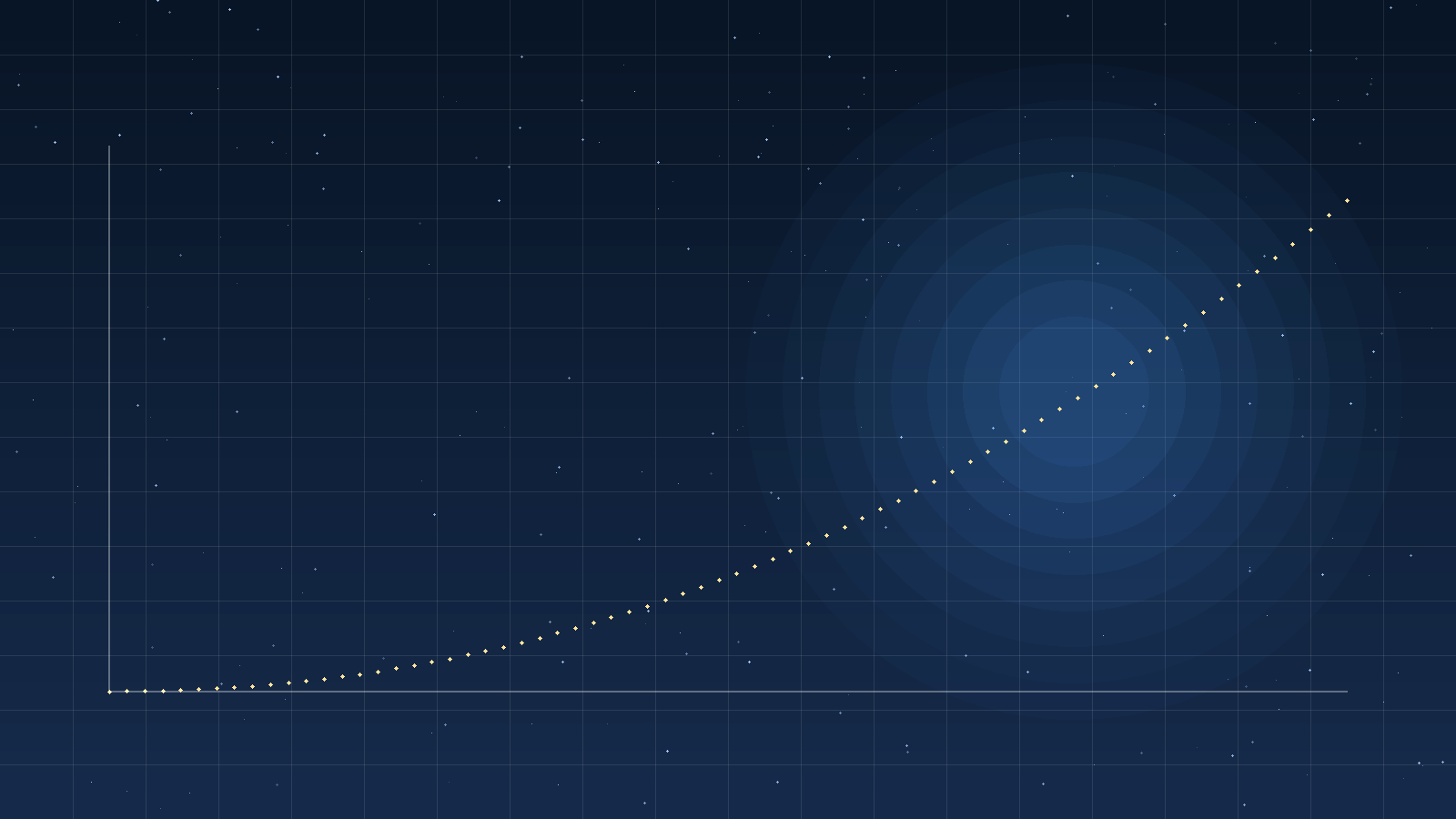
Illustrative index from Epoch AI’s ~2.5× annual growth rate
The practical consequence: the frontier gets more expensive to train while the previous frontier gets dramatically cheaper to run. Product teams should treat yesterday's frontier as today's commodity — and price their architecture accordingly.
Cheaper tokens, bigger bills
Lower unit cost does not automatically lower spend. When a capability becomes 280× cheaper, teams use it for more tasks, at higher volume, with longer contexts and more retries. Economists call this the Jevons paradox; platform engineers call it the monthly invoice. The AI Index's efficiency number and the IEA's projection that data-centre electricity demand roughly doubles by 2030 are two sides of the same system: efficiency determines what is economical, demand determines how much of it we do.
“Cheaper intelligence changes the shape of the product, not just the bill. When a model call costs almost nothing, the constraint moves to verification, latency and trust.”A6X Engineering — research note
What the numbers do not say
Benchmarks are improving quickly — the AI Index reports large one-year gains on demanding evaluations — but benchmark progress is not the same as reliability in production. A model that scores higher on a static test can still fail on your data, your edge cases and your compliance constraints. The right response is not cynicism; it is measurement at the level of tasks.
- Measure cost per completed task, not cost per thousand tokens. Retries, verification and human review belong in the unit economics.
- Route by difficulty. Use a small model by default and escalate only when confidence or policy requires it.
- Cache what is stable. System prompts, retrieval context and deterministic outputs are often the largest avoidable cost.
- Keep an eval set of your own. Public benchmarks tell you about the field; your eval set tells you about your product.
Sources & further reading
Related insights

Research
The electricity bill of intelligence: 415 TWh today, 945 TWh by 2030
Data centres consumed about 415 TWh in 2024 — roughly 1.5% of global electricity. The IEA expects that to more than double to about 945 TWh by 2030. A...
3 min read
Read

Research
Why Boring Infrastructure Wins
Clever infrastructure is impressive in a design document and expensive in production. Boring infrastructure is engineering that has been repeated enou...
1 min read
Read